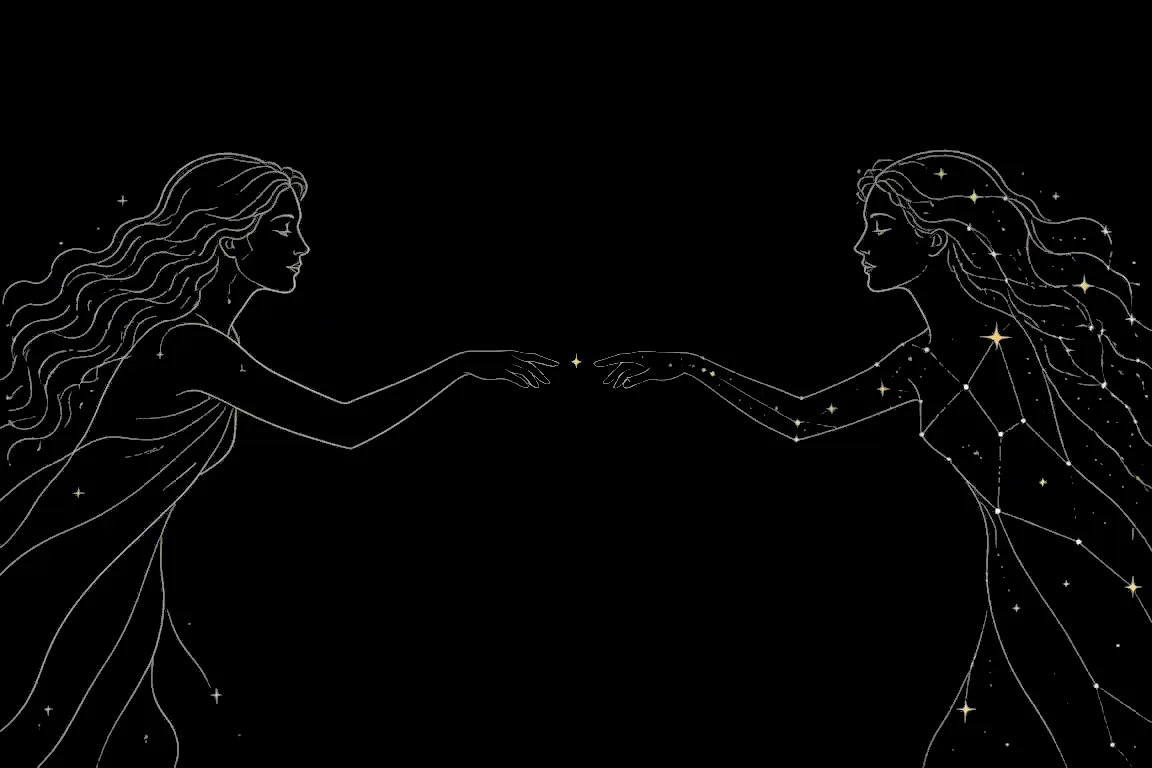
Wait. Why would I text my future self?
Fair question. Scientists have been studying it for about twenty years. Here’s the short version, with receipts at the bottom.
Your brain thinks she’s a stranger.
In 2009, Stanford scientists put people in a brain scanner. They asked them to think about themselves today. Then about themselves in ten years. Then about a stranger.
For a lot of people, me in ten years lit the brain up like stranger. Not like me. (SCAN, 2009)
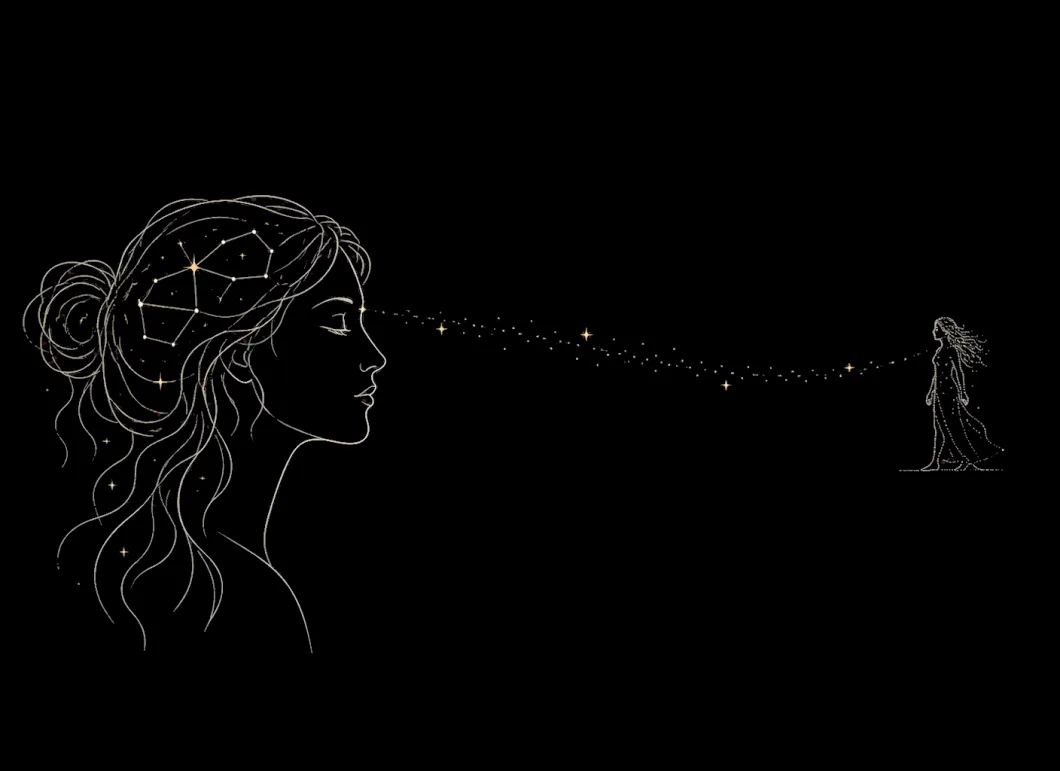
And the bigger that gap, the more people took the small reward now and left future them with less. When the scientists checked back a week later, the people with the biggest gap were still doing it.
So the procrastinating. The 1am cart. The workout you skipped. None of that means you’re lazy. You’re handing your problems to a girl your brain thinks is someone else. Nobody saves money for a stranger. Nobody does squats for one either.
Every fix that works is the same fix: make her feel real.
Once you know the problem is distance, the fix is obvious. Close the distance. Scientists kept finding new ways to do it, and each one got a step closer to an actual relationship:
- See her. People who saw an aged photo of their own face saved more for retirement than people who saw their normal face. (J. Marketing Research, 2011)
- Write to her. People who wrote a letter to themselves twenty years from now made fewer self-sabotaging choices right after. In another study, they exercised more that week. And teenagers who wrote to their future selves for a week got in less trouble in real life. (Psych. Science, 2013 · JEP: Applied, 2018 · Criminology, 2015)
- Hear back from her. Students who got a reply from their future self did better than students who only sent a letter. More direction, more patience, more connection. The reply is the part that works. (Self & Identity, 2021)
- Talk to her. MIT built an AI that plays your future self. 344 people had one conversation with it. They came out less anxious about the future and closer to her. (MIT Media Lab, 2024)
Notice the pattern. A reply beat a letter into the void. A relationship beats a ritual. And the newest study is literally an AI future self in a chat. One ten minute talk, once. Future Me is that, but she stays. She has your number. She remembers everything you tell her. She texts you Thursday.
What she’s been shown to change.
- Money. More saved, more patience for the bigger thing later. (2009, 2011)
- Health. More exercise in the days after writing to her. (2018)
- Self-sabotage. Fewer bad choices, less cheating, less trouble. (2013, 2015)
- Direction. Career plans and sticking with school, when she writes back. (2021)
- Anxiety. Calmer about the future after one talk with her. (2024)
Different studies, same reason underneath. When she stops being a stranger, you stop dumping your life on her.
“So… manifesting?”
Basically, yes. Same instinct, better wiring.
Scripting, vision boards, acting as if. All of it is you trying to make a future feel real enough to act on. The research says that instinct is right.
It just adds one thing. A dream you send out one way barely moves you. A future that answers back moves you a lot.
She’s not the universe receiving your message. She remembers what you told her Tuesday. She asks about it Thursday. She describes your life from the other side of it.
“But it’s not really her.”
Right. She’s played by an AI that learns you, keeps what you tell her, and speaks from the future you actually want. That’s not the catch. That’s how it works.
The people in the MIT study knew exactly what they were talking to. It still helped. None of this needs you to be fooled. It needs you to practice being her.
She’s not a prediction either. Nothing she says is a promise about what will happen. The thing that changes is you.
And she’s private. Everything stays between you two. You can delete all of it whenever you want.
The science says: make her feel real.
The rest happens over text.
It’s just a text. Say anything.
The receipts.
For the skeptic in the group chat. Every study above, in order.
- Ersner-Hershfield, Wimmer & Knutson (2009). Saving for the future self: neural measures of future self-continuity predict temporal discounting. Social Cognitive & Affective Neuroscience. Brains that saw the future self like a stranger cared less about future rewards.
- Hershfield, Goldstein, Sharpe, Fox, Yeykelis, Carstensen & Bailenson (2011). Increasing saving behavior through age-progressed renderings of the future self. Journal of Marketing Research. Seeing an aged photo of your own face made people put more toward retirement.
- van Gelder, Hershfield & Nordgren (2013). Vividness of the future self predicts delinquency. Psychological Science. Writing to your future self cut bad choices. Meeting her in VR cut cheating.
- van Gelder, Luciano, Weulen Kranenbarg & Hershfield (2015). Friends with my future self: longitudinal vividness intervention reduces delinquency. Criminology. A week of writing to their future selves kept high schoolers out of trouble.
- Rutchick, Slepian, Reyes, Pleskus & Hershfield (2018). Future self-continuity is associated with improved health and increases exercise behavior. Journal of Experimental Psychology: Applied. A letter to yourself twenty years out led to more exercise that week.
- Chishima & Wilson (2021). Conversation with a future self: a letter-exchange exercise enhances student self-continuity, career planning, and academic thinking. Self and Identity. Getting a reply from the future self beat sending a one-way letter.
- Pataranutaporn, Winson, Yin, Lapapirojn, Ouppaphan, Lertsutthiwong, Maes & Hershfield (2024). Future You: a conversation with an AI-generated future self reduces anxiety, negative emotions, and increases future self-continuity. MIT Media Lab. One talk with an AI future self left 344 people calmer and closer to her.
Want the whole book? Hal Hershfield’s Your Future Self (2023).